Showing posts with label British. Show all posts

Wednesday, 24 December 2014

Homemade British Sausage Rolls


This season we craved a taste of London, so I am proud to share a successful experiment in The Classic British Sausage Roll: herby meaty bits of porky deliciousness, encased in a flaky buttery puff pastry!

It sounds unusual, but some grated lemon zest really turned out to be the secret ingredient to lift and lighten what can sometimes be an overly stodgy treat. I learned the trick online, and I can't recommend it enough. Herbwise I stuck with the classic combo of sage and thyme (and the household highly approved), but feel free to play around with whatever aromatics you see fit. You can also use store bought puff pastry if you're too lazy to make the dough from scratch. Both the filling and pastry can be made a day or two ahead of time.

They're rich, hearty, and quite possibly the best savoury party bites ever. Merry Christmas and happy eating this holiday season everyone! :)

Homemade British Sausage Rolls
Makes about 40 bitesize pieces (*Feel free to make large individual portions if you like. Adjust cooking times accordingly and bear in mind the pastry will puff up.)

  • Filling (you can make this several days in advance for the flavours to intensify):
Stir together in a bowl or mush in a ziplock bag to marinate:
1 1/2 lbs minced pork (*I asked my butcher to grind up a piece of pork loin. You can also use shoulder or ready-bought sausagemeat. Some recipes suggest pork belly or adding some streaky bacon... personally I think this would be too fatty)
Grated zest of 1 lemon
2 tbsp fresh chopped sage leaves (roughly a handful)
Roughly 2 tbsp fresh thyme (about 16 sprigs- I usually just run my hand down the stem and pull the leaves off instead of chopping)
1/2 tsp ground nutmeg
Salt and black pepper to taste


Like herby pork Play Doh :)
  • Puff pastry
Toss together in a large bowl (*the colder all your ingredients are, the better. It can help to put this whole bowl into the freezer briefly):
2 sticks (230g) very cold butter, diced into cubes
2 cups plain flour
Pinch of salt

Gradually add 1/2 cup ice cold water bit by bit, stirring slowly with a butter knife until incorporated and kneadable (not too sticky). Press with your hands into a rough dough ball (the butter cubes will still be visible) and cling wrap. Refrigerate at least 30 mins or overnight.

To bake:

Have 1 beaten egg and some flour on standby. Preheat your oven to 425 F (220 C).

Place the rested dough ball on a well-floured surface, dust the top with more flour (I like to cover it with a sheet of cling wrap to ease clean up) and roll out slightly into a disc. Fold in the edges to form a square, flip it over and roll out into a large rectangle about 0.5 cm thin.

Cut the dough into 4 strips. Working with one piece at a time, roll each dough strip out longer and thinner if necessary. Squeeze a quarter of the meat into a long log with your hands (beware sexual innuendoes from cheeky roommates) and place in the centre of the pastry. Brush one edge with some water or egg wash, and roll it up snugly. 

Cut into about 10 pieces. Arrange on a baking tray.  Repeat with the other 3 strips of pastry and the rest of the meat.

Make a slit or several on top of each piece with a knife (to allow steam to escape). You can also prick with a fork.

Brush each piece with some egg wash.

Bake at 425 F (220C) for 25-30 mins until golden brown and crisp. The oil from the pork may ooze and bubble- don't worry, it's meant to happen :)

Remove from oven and let cool slightly.

Serve warm, with some good ol' HP brown sauce if you wanna be really pukka :) Enjoy!


Wednesday, 25 December 2013

Really Easy Dark Gingernuts/ Ginger Snaps


The holiday season calls for spice and all things nice, so here I present a great basic recipe for a British classic that will have your home smelling like Christmas in no time! :)

Crunchy, buttery and surprisingly easy, these delicious gingernut biscuits (or ginger snaps as they are known Stateside) are just the right snappy texture and flavour, starting warm and robust in your mouth then gradually melting into a pleasant fragrant sweetness as you chew. They will also take you less than an hour from start to finish (great for last-minute plans!), require no machinery at all and are endlessly adaptable to your personal taste.

I stirred in some black treacle for a deeper darker flavour, but feel free to omit this and use all golden syrup if you prefer the normal version. You can also use honey, molasses, dark brown sugar, more or less ginger and other spices if desired.

Happy baking and happy holidays y'all, may you have a joyous food-filled 2014 ahead!:)

Really Easy Dark Gingernuts/ Ginger Snaps
Makes 30 tasty biscuits


Preheat oven to 350 F/180 C.

Melt 1 stick (about 100g) butter in a pot on the stove, or in a large bowl in the microwave.


Remove butter from heat and stir in:
1/2 cup (about 100g) soft light brown sugar
2 tbsp golden syrup (if you don't have it, substitute with honey)
2 tbsp black treacle (substitute with all golden syrup/honey if preferred)


My trusty red can of Tate & Lyle that a friend 
brought from London. Thanks Jasmine!:)


Sift in and stir until well-combined:
2 cups plain flour
1 tsp baking soda
2 tsp ground ginger (more if you like it strong!)
Optional: Dash of ground cinnamon, nutmeg, cloves, allspice or even black pepper if you're inclined


Roll teaspoonfuls of dough into a ball with your hands. Place on baking sheet well spaced out, and press down slightly to flatten.


Bake 15-20 mins. Remove from oven and allow to cool til hardened.


Enjoy dunked in a cuppa!

Saturday, 30 June 2012

Lemon Courgette Cake


If the idea of using any vegetable other than carrots in desserts is alien to you, trust me: this fresh and summery lemon courgette cake is the best excuse to start, and no one (not even picky children) would ever guess unless you told them. Light and zesty, the recipe below produces a moist sponge that is delicious on its own but can be coated with a crunchy lemon sugar crust or cream cheese frosting if desired. I have provided the recipes for both down below.


To top it all off, it's also dead easy. Step 1: Stir everything and bake. Step 2: Surprise everyone!


Lemon Courgette Cake
Makes one 12 x 9 inch rectangular pan


Stir all together in a large bowl until just combined:
1 large (approx 400g) courgette/zucchini, grated
2 large eggs
1/2 cup (125 ml) vegetable oil
3/4 cup (150g) sugar
Grated zest of 1 lemon
Handful of sultanas
1 3/4 cup (225g) self-raising flour
1/2 tsp baking soda
1/2 tsp baking powder
A dash of ground cinnamon and nutmeg (or mixed spice)
Optional: A handful of chopped nuts


Line a 12 x 9 rectangular pan with greaseproof paper. Pour batter in and spread evenly. Bake 30 mins at 160C fan assisted (180 C without).


If coating with sugar crust, immediately pour topping over when cake is still hot. If using cream cheese frosting, let cool completely before coating.


Above: with the lemon cream cheese frosting
  • Lemon Cream Cheese Frosting
*It is crucial that your cheese and butter (the butter especially!) is at room temperature so that your frosting isn't lumpy. If you forget to take them out of the fridge in advance to soften, just zap for 5-10 seconds in the microwave before beating.


Beat together with an electric mixer until creamy:
100g icing sugar
200g cream cheese, softened to room temperature
50g butter, softened to room temperature
Juice of 1/2 a lemon


Lift the cake out of the pan onto a large chopping board or flat surface, and peel the greaseproof paper off the sides of the cake (leave the bottom). Spread the frosting over the cooled cake evenly with a spatula. Slice into squares and eat!


To store, keep refrigerated.


  • Crunchy Lemon Sugar Crust
Stir together in a small bowl:
1/2 cup (100g) granulated or caster sugar
Juice of 1 lemon


Pour and spread evenly over the cake immediately once it is out of the oven (so the juice soaks through and the sugar stays on top). Leave in the pan until completely cold, then slide out quickly onto a large chopping board or flat surface. Slice into squares.


Store at room temperature.

Saturday, 16 July 2011

Baked Rhubarb Pudding


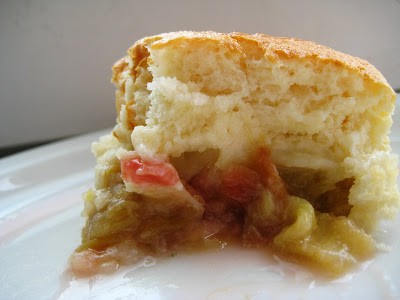
I must admit this is the first time ever I've used rhubarb- to date I've found this vegetable an alien and intimidatingly English ingredient, with its odd giant celery-like appearance, strange pink/green hue and the fact that it's a vegetable yet used mainly for dessert. Thank goodness my friends Donat and Olivia brought a delicious tray of this to a party one day, for there came my introduction to how utterly tasty and flavoursome it can be.

Rhubarb- not so scary anymore

Based on a recipe from Delicious magazine, this summery dessert balances tartness and sweetness to perfection, combining chunks of rhubarb cooked in sugar until syrupy and soft with a light fluffy sponge and a gooey bit in between where the two meet. English pudding at its best.

Baked Rhubarb Pudding
Serves 6-8

Stir together 400g rhubarb, chopped into chunks, 100g sugar and a
bit of water in a deep casserole dish.

Bake at 170 C fan assisted (or 190C without) for 25 mins until tender.

Drain the liquid (which should be a delicious pink rhubarb syrup) into a separate
bowl and reserve for later. Let the chunks cool, and using your finger spread a
bit of butter around the sides of the casserole dish.

Lower the oven temperature to 160 C fan assisted (or 180C without).

Whisk together on high speed until pale and thick:
3 egg yolks
150g sugar

Whisk in:
Grated zest of 1 lemon
75g self-raising flour, sifted
Pinch of salt

Stir in:
150ml semi-skimmed milk
150ml single cream

In a separate clean and dry bowl, whisk together 3 egg whites with a pinch of cream of tartar until stiff.

Fold into the batter until a well combined foamy mix.

Pour the batter over the rhubarb chunks, place the entire casserole dish into a larger roasting pan and pour boiling water into the roasting pan until halfway up the sides of the dish to form a bain-marie. Bake at 160C fan-assisted for 40 mins until golden and the centre of the sponge is firm to touch.

Ready!

Serve warm or cold, with a generous drizzle of rhubarb syrup.


Wednesday, 29 June 2011

Victoria Sponge with Fresh Strawberries

SAM TAN'S KITCHEN HAS MOVED! Please visit the new website/online store at www.samtanskitchen.com. You can also follow Sam on InstagramFacebook and Twitter. Thank you!


Ah, good old Queen Victoria and her penchant for a bit of sponge cake with her afternoon tea! There is nothing quite as classically British, quite as light and summery, quite as ridiculously easy to make than this delicious combination of butter sponge, jam and cream.

My version below also consists of a layer of sliced fresh strawberries- trust me, it makes all the difference and makes an already good thing great.

Victoria Sponge with Fresh Strawberries
Makes one 8" round cake


Dump all into a bowl and whisk briefly with an electric mixer until well combined:
175g (1 1/2 sticks or 12 tbsp) butter, softened
175g (3/4 cup) caster sugar
175g (1 1/2 cup) self-raising flour, sifted
1 tsp baking powder
3 eggs

Divide the batter equally into two 8" round sandwich pans (lined with greaseproof paper to ease removal). Bake at 160C/ 320 F fan-assisted (or 180C/ 350 F without) for about 20 mins or until golden yellow and springy to touch.

Allow to cool in tin for about 10 mins, then remove from pan and let cool completely on a wire rack.

Spread one layer with about 3 tbsp strawberry jam. Slice a large handful of strawberries and layer over the top.

Whip 300ml double cream until thickened and spread over the strawberries.

Place the second sponge layer on top and dust with icing sugar. Serve immediately.


Wednesday, 5 May 2010

Smoked Fish Cakes with Spring Onion and Chive


Sometimes mushing together a bunch of leftover ingredients that urgently need using up yields the most delicious result :)

These hearty flavour-packed patties are formed from a combination of potatoes that had started to quite seriously sprout, some gradually withering spring onions left from a previous recipe experiment, the last few lonely capers swimming around in a jar of vinegar and a lemon that had been waiting so long for its turn it had started to look a bit sulky. Throw in some smoked fish bought off a supermarket reduced rack, a good dash of seasoning and an egg to bind it all and voila- a warm and satisfying meal perfect for spring.

Adapt as needed to make it a starter or main, and serve alongside tartare sauce or salsa.

Smoked Fish Cakes with Spring Onion and Chive
Makes about 12 fishcakes


500g potatoes (2 large)- Cut into chunks and boil in salted water for about 15 mins until tender. Drain thoroughly until as dry as possible, then mash and set aside.

400g boneless smoked fish fillets (I used smoked cobbler which happened to be on discount, but any smoked fish works fine)- place in a deep frying pan with about 1 cup milk (or use water if you don't want to waste milk) and poach over low heat about 5 mins until the fish flakes easily. Lift the fish pieces out and break into chunks with a fork.

Combine the flaked fish and potatoes well in a large bowl with:
1 egg, beaten
A handful of fresh chives, chopped finely
A few spring onions, chopped
1 heaped tbsp capers, chopped
Grated zest of 1 lemon
Good squeeze of lemon juice (I used about 1/4 of a lemon)
Salt and freshly ground black pepper

Pour about 3 tbsp plain flour onto a plate (or use breadcrumbs if preferred, or some people dip in flour then in egg then in breadcrumbs to create a thicker crust). Drop a tablespoon of the fishcake batter into the flour and press it lightly to form a round pattie. Use two tablespoons to flip and dust it until lightly coated on both sides. Shake of excess flour and place fishcake onto a tray/plate. Repeat until all mix is used up.


At this point, the fishcakes can be frozen for future use if desired.

To cook, heat some olive oil in a large heavy frying pan and fry several fish cakes at a time over medium heat, about 5 mins on each side flipping midway until golden brown. If cooking from frozen, don't bother defrosting- just
fry straight from the freezer for 10 mins each side.

Serve straightaway with a lemon wedge and tartare sauce or salsa. Dig in heartily with a fork!


Wednesday, 14 October 2009

Garlicky Roast Lamb Shoulder with Herbs


Lamb is simply my ultimate favourite when it comes to English Sunday roasts- more moist and succulent than traditional beef (recipe here if you prefer it), and definitely far superior in natural flavour than pork or poultry.

Whilst a whole leg used to be my cut of choice, I recently discovered that lamb shoulder is not only cheaper but a provider of sweeter, more tender meat, probably due to the fact that it is a more gelatinous joint which a higher proportion of fat layered between its flesh. Try and choose a piece that isn't too fatty (it's no fun chewing on forkfuls of white stuff) and make sure you use a wire rack so that all the grease can drip off (to be used later as part of the gravy, or to bake the Yorkshire Puddings).

Whichever cut you use, as with any roast the trimmings and sides are just as important as the meat itself so be sure to serve this with lots of rich gravy, roast potatoes/parsnips/carrots (or buttered/mashed/baked if you prefer), something green like broccoli or beans or cabbage and most importantly, the aforementioned Yorkshire puds to soak it all up.


Garlicky Roast Lamb Shoulder with Herbs (serves 6)
*Recipe based on a 2kg shoulder joint on the bone, cooked to a juicy pink medium. Vary your cooking times accordingly*


*Marinate your joint a few hours or even the night before if you have time

Place the lamb on a wire rack over a foil-lined roasting tray and make little but deep incisions all over both sides of the meat with a small pointed knife. Smash 3-4 large cloves of garlic (or however much you want) very well until it can be stripped into pulpy slivers, then stuff into each slit. Make sure to tuck garlic under any layer of fat or crevice in the meat as well, so that the meat is nicely garlicky all over.

Rub both sides of the meat with the following:
Light drizzle of olive oil (not too much as the joint already has its own fat)
Good splash of Lea & Perrins Worcestershire sauce
Lots of salt (I use crumbled sea salt flakes with rosemary but any salt is fine)
Lots of freshly ground black pepper
Generous sprinkle of mixed dried herbs (I like a good mix of thyme, marjoram, parsley, oregano, rosemary, sage and/or basil, gives a far more complex flavour than just one herb alone)

Preheat oven to 230 C/445 F (210 C/410 F fan-assisted). Pour a bit of water into the roasting pan under the rack (so that the meat stays moist), cover the entire tray in foil and roast for 20 minutes at this temperature. Lower heat to 200 C/395 F (180 C/350 F fan-assisted) and continue to cook about 15 minutes for every 500g, then take the foil off and let it roast a further 15 minutes uncovered (so my 2kg joint took about 1 hour 35 minutes in total). There is no need to baste while roasting- the shoulder is fatty enough to baste itself.

Remove the lamb from the oven, wrap it in foil and let it rest at room temperature for 20-30 mins. This is MUST so the inside of the joint can turn more succulent cooking in the residual heat. (I usually make my Yorkshire Puddings at this point so everything is ready to eat at the same time).

Once rested, carve and enjoy! :)

Gravy:

Pour all the juices from the roasting tin into a pot, adding some water if required. Chuck in a few spoonfuls of gravy granules, some milk or a dollop of cream to thicken and bring to boil.

Wednesday, 8 July 2009

Creamy Mash with Sauteed Bacon & Onions


I always buy potatoes in huge bags because they're cheaper that way, but more often than not I end up with a lot of leftover sprouting ones and suddenly need to find a use for them straightaway. For the record, there is nothing wrong with a sprouting potato as long as you remove the sprouts and eyes thoroughly- I've eaten them for years and have yet to be poisoned:)

Surprisingly, and this has never happened before, today I discovered a sprouting onion too-one random large brown one in the store-bought bag had a bunch of tall green shoots growing out of its top! They looked and smelt like spring onions so I did some Googling and found out that you could indeed use them as such. The new things you learn everyday hey? :)

So there you have it, two perfectly safe-to-eat sprouting vegetables that combined to result in a delicious version of a classic comforting British dish.

Creamy Mash with Sauteed Bacon & Onions
Serves 3-4 as a side

The Mash:
Wash and roughly peel 6 medium white potatoes (I love to leave bits of skin on for a rustic bite). Cut into chunks, boil until tender and drain.

Heat 100ml double cream and 50g butter briefly in a microwave for about 30 seconds until butter is melted and cream is warm (or you can do it in a pan over the stove if you prefer). Add to the cooked potatoes and mash until creamy.

Season well with salt and freshly ground black pepper.

Bacon and Onion Topping:
Heat 1 tbsp olive oil in a small skillet. Add and saute over high heat until charred:

1 or 2 stalks spring onions (scallions), finely chopped
1 medium onion, sliced into strips
Some bacon, cut into bits

Spoon generously over mash. Serve immediately.